Dark Side of Gratitude
What if gratitude, for all its beauty and wonders, also has a dark side?
Today, I’m diving into a darker side of gratitude, the impact it can have on our psyches and wellbeing, how to notice when you might be caught in it, and possibilities to make a shift.
Before I move any further into this topic, I want to offer a reminder that this blog is intended for informational purposes as a support our wellbeing only, and is not here to provide or substitute for clinical treatment, diagnosis, or clinical recommendations of any kind.
So, what do I mean by the dark side of gratitude? Can gratitude really have a negative side to it? It’s supposed to be amazing for our physical and emotional health, right?
Yes – practicing gratitude and acts of kindness is amazing for our emotional, physical, and spiritual health. For sure.
And yet, we can sometimes get caught in a very tricky side of gratitude when we somehow go astray from the kindhearted and abundant essence of gratitude, and move into the shaming and damning, righteous, black and white world of “should”.
This is when gratitude morphs into platitude. When the shoulds and platitudes enshroud gratitude, the notion of gratitude can become very tricky, invalidating, and even damaging.
What do I mean by that? Stay with me here, I’ll explain.
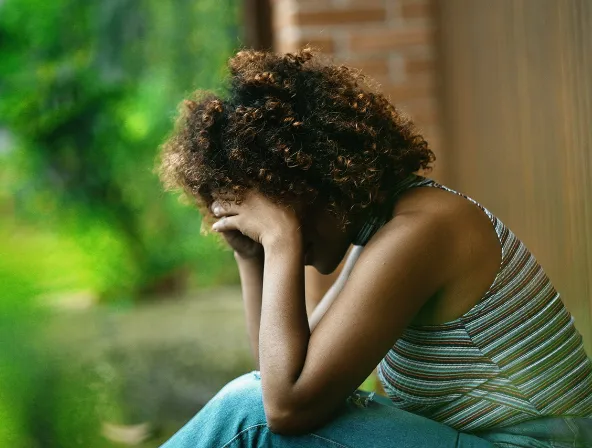
Has anyone ever told you, “Look at all you have, you should be grateful!” when you were experiencing an uncomfortable feeling like sadness, anger, grief, or trying to uphold a boundary for yourself?
Most of us at some point in our lives have experienced that condemnation. Some of us may have even expressed it to others, too. We may have also expressed this kind of thing to ourselves (“I should be grateful”) as a way to negate or minimize what we actually are feeling, thinking, or experiencing in that moment. This is typically a judgmental phrase, with an implicit or explicit message that you are not being/feeling/acting in ways that are honorable or acceptable.
When we receive that message from ourselves or others, it can actually feed an inner belief of not doing things right enough or not being good enough. Of feeling or thinking in ways that are not ok or acceptable or that don’t have permission to be attended to because they are somehow wrong.
As we navigate this, we might feel guilt or shame or bad about ourselves. We might suppress our feelings because we don’t think they’re acceptable. Or we may actually feel even angrier, or more anxious, sad, or tense because rather than being attended to in compassionate presence or attending to ourselves, we are receiving a message that our experience isn’t worth being attending to because our experience is – and we are – “ungrateful”. This typically causes our feelings to swell -rather than soothe - in response.
Of course, it can definitely help to regularly connect with what we’re thankful for. It’s wonderful to feel that in and really allow our true gratitude to be present and alive for us.
But, if that practice starts as or morphs into a negation of our uncomfortable feelings, or of our struggle, then maybe we need to take a closer look and see what might be really going on.
This is where, for me, the “both/and” concept can be super helpful.
Wait, what do I mean by the both/and concept?
Oftentimes we can get caught up in black and white thinking, right? It’s good or bad. It’s right or wrong. I’m happy or I’m unhappy. I’m grateful or I’m ungrateful. But when do we actually feel in such simple ways, really?
Our human emotions and experience are rarely so tidy.
I know that if someone I care about does something I perceive as unkind to me, I might feel angry because my boundary has been crossed. I’m not purely angry, though. I might also be confused – why did they do that? Do they not care? Do they not know how that would feel for me? I might be sad and hurt. I might be anxious about what this means for our relationship. I might feel insecure because it might cause me to wonder if I’m worth this treatment I’m receiving or if I’m seeing it all wrong?
So, am I angry? Yeah, I’m angry. But it’s not that tidy black and white. It’s naturally just… messy.
Same with gratitude.
In the same scenario I mentioned above where someone does something I perceive as unkind, I might still have gratitude for the ways that person has shown up in my life, for the good times, for the lessons I’ve learned with them, for the ways they’ve enriched my life. And yet, in that moment or that time, I’m not feeling that gratitude because the other uncomfortable feelings are too strong in the moment.
It can be very helpful to be able to be present to our pain, so that we can move through it. It can also be really important to have supportive and safe people around who can also hold space for our pain and allow us to vent or cry or process whatever struggle we’re in.
In those moments, someone telling us (or us telling ourselves) to focus on the bright side or be grateful isn’t always the medicine we need. Not in those moments. In those times, what we often most need is someone to be with us in the darkness. Or for us to give ourselves the permission to safely feel and be present to those uncomfortable feelings so that we can express, heal and move on. By shoving them down or away, they can stay stuck and continue to impact our life ongoing without us even realizing it.
Here's where the both/and really shines:
While part of our healing is to notice our struggle and be present to our uncomfortable feelings. That part may not include gratitude because we’re meeting our darkness and struggle. Then, once we’ve released whatever feelings we need to release – allowed that acceptance, that flow rather than surpression – THEN our healing can also come from the medicine of gratitude.
The medicine of gratitude is not the platitude gratitude that tends to minimize and repress the struggle: “I should be grateful.” “I need to look on the bright side.”
But the real gritty dimensional gratitude that is part of our healing, “Wow, I’m in pain because this person really matters to me. I’m so thankful for the good times I’ve had with them in my life and I’m hurting because something has happened that crossed my line.” Or “I’m in pain and I’m so thankful that I’m realizing this isn’t ok for me and not pretending that it is.” Or “I’m struggling and I’m thankful that I can return to the air in my lungs and breathe.” Or “This is hard, and I’m so thankful that the sun is shining and the birds are chirping and reminding me that there’s more to life than this situation.”
This is when gratitude is medicine. The ability to hold the both/and. Yes, life is struggle. And there is beauty all around me. Yes, I’m hurting. And I am thankful for the areas in my body or spirit that are not in pain.
When we can hold space for our struggle and our grace – that is when the abundant, light of gratitude can really shine.
Who wants to be reduced to a one-dimensional gratitude platitude, anyway? I know I don’t.
Holding space for the both/and can allow room for the wholeness of our lives, the wholeness of our being, and our experience, right?
This, to me, is a form of freedom.